Success Starts Daily
Advice for Incoming Honors Students on the College Transition
By Chase Orinski and Samantha Salituro
It’s hard to know what college will be like until you begin. In high school, it is easy for high-achieving students to immerse themselves in challenging advanced placement (AP) classes, while also managing a jam-packed schedule with sports practices and other extracurricular activities. This raises the question—how can these same students find success among thousands of others attending the University of Iowa?
Dr. Shaun Vecera, director of the University of Iowa Honors Program and a professor of psychology, admitted that setbacks occur quite frequently for new college students.

In terms of the differences between high school and college, he stated, “You’re kind of on shifting sands since you no longer have class every day and the workload changes, which creates some uncertainty amongst new students.”
When you are just one of hundreds in a lecture hall, it is common to feel disconnected from professors. But by approaching them in a smaller setting, like office hours, you can introduce yourself and get to know them more personally. This will especially come in handy when the content becomes challenging.
“It’s not necessarily a failure when you have to reach out for help, but instead a positive thing because you’ve taken the initiative to recognize that you aren’t understanding,” Vecera said, who emphasized that this shift in mentality is crucial for student learning.
Vecera also highlighted the value of campus involvement. Upon arrival at any university, students will often hear the advice, “Get involved!” While getting involved is a great way to meet new people and discover new interests, overcommitment can also create a frantic schedule and quickly become unmanageable.
Vecera recommended being selective with campus clubs. “Start by picking one and doing it well,” he said. “Allow yourself to make an informed choice as to what is best for you, not an impulsive one driven by what someone else has imposed on you. You can add more activities from there.”
As honors students, it’s important to cut yourself some slack when struggling, but also remember to welcome challenges and face them head-on.

Vecera advocates committing to the learning process, and he acknowledges that college isn’t easy. However, he posed the question, “If you came to this university knowing everything and it came easily, why would you come at all?”
While there is a heavy emphasis on academics in the college transition, student health and wellness are key elements of success.
Incoming first-year students will hear many variations of “Make sure you take care of your body,” or “Beware the freshman 15.” While yes, physical health is very important for an incoming freshman, mental health is too.
In the honors program, there are various resources to keep up with your health and wellness. One of these is a spring semester class taught by Dr. Emily Hill, the honors program’s associate director, called Honors Student Health and Wellness.
The class helps students to build habits in studying, going to the gym, or other physical activity, and reflecting daily by journaling.
Hill emphasized that there is something for everybody when taking care of mental and physical well-being, including finding community.
“Imposter syndrome affects everyone throughout their life at some point,” she said.
Being able to overcome this is one of the biggest lessons in the class. Hill was a former honors student herself, and when she was an undergraduate, she didn’t have great habits of self-care, especially as an underclassman.
“College is a different animal,” Hill said of the transition from high school.
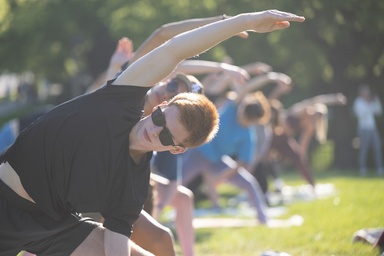
She had long been interested in starting yoga, but did not try it until she was a senior, when she enrolled in a yoga course to fulfill her physical education credits. “If I took it for credit, I knew I would get there,” Hill said.
Be it yoga, weight lifting, or running, it is important to set aside time to care for your body, even if you have to take it for credit to get motivated.
“It is about finding a work/life balance,” Hill said, and she urges students to care about their mental and physical health early, rather than waiting until everything is hectic.
For incoming first-year honors students, despite the cliched advice to keep healthy habits, it does pay off to do so.
While it is difficult to start these mental and physical health habits, once you do, Hill emphasizes that there needs to be a balance between your newfound habits and staying productive every day.
This could look like napping between study sessions for an important exam, or going to the gym at your preferred time during the day, either before or after getting homework done. Having time to yourself, especially in your first year, is extremely beneficial while living in the dorms. The outcome of work/life balance will be maximized productivity over the course of your college career.
As Hill’s and Vecera’s advice indicates, it is unrealistic to expect a flawless transition into college academics. Rather, expect slight setbacks and be ready to adjust your path to find success every day. Putting it all together, from study skills to health and wellness habits, is key to thriving as a first-year honors student.


About the Author
Samantha Salituro is a first-year student majoring in biomedical sciences on the pre-medicine track, with a minor in Spanish. From Palatine, Illinois, Samantha plans to pursue a career in healthcare.

About the Author
Chase is a second-year student at the University of Iowa studying sport and recreation management with a minor in business administration. He is from Bethlehem, PA and is a student manager for the Iowa baseball team working in video and technology.