Honored to be Bookish
An Honors Program in Iowa’s City of Literature
By Emily Vitosh
Students come from far and wide to study with the prestigious writing programs at the University of Iowa. It should come as no surprise, then, that many students in the Honors Program are passionate about books, reading, and writing too.
Honors Program Associate Director Emily Hill is also known for her love of books. “It has just been something that’s part of my DNA,” said Hill, who earned a BA in English and honors in 2008 and an MA in English in 2011 before focusing on education for her doctorate.
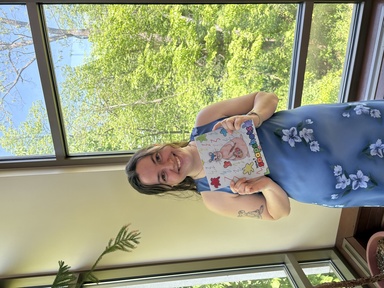
When she joined the University of Iowa Honors Program staff in the spring of 2019, it was a good fit in more ways than one. “I was very excited to be moving to a city that’s so entrenched in the literary tradition,” Hill said.
While a literary tradition is built into the fabric of the University and Iowa City, it is also thriving in the Honors Program.
“It’s kind of baked into the Honors Program because of how important the reflection and metacognition part of it is,” according to Student Scholarship and Development Specialist Candice Wuehle. “Something we’ve always said at Iowa is that good writing is just good thinking.”
A published author and Iowa Writers’ Workshop graduate, Wuehle worked closely with Honors Program Director Shaun Vecera to entwine this emphasis on writing with metacognition and experiential learning in the program’s Second Year Seminar.
“Writing is a very intensive, cognitive process,” said Vecera, who also leads Learning at Iowa, a campus wide project to support student success through evidence-based strategies.
Third-year undergraduate-to-graduate student Olivia Bishop praised this aspect of the honors curriculum.
“The ability to reflect inward is something needed in every aspect of life, and is also something you can find a piece of in the writing culture here in Iowa City,” she said.
Currently working on a BA in English and creative writing and an MA in library and information sciences, Bishop is the executive editor of Snapshots, a campus magazine for children’s literature. Honors students have the opportunity to reflect and write about experiences such as these as part of the experiential learning curriculum.
Along with writing being ingrained into the program, several of the program's staff are published authors. Plenty of students come to this university for the writing programs, so this aspect of the Honors Program creates more personal and professional connections between staff and students.
Wuehle believes this characteristic of the Honors Program “naturally brings passion and interest into the program.”
Honors offers unique writing courses, including Wuehle’s Poetics (Taylor’s Version) in the fall and a creative writing workshop in the spring, as well as a course on classic cult cinema, taught by Hill.
“Honors program classes are so fun because we get the opportunity to do special things,” said Wuehle.
In the Poetics course, for instance, students made friendship bracelets and held a Swiftposium–a symposium to share their scholarship on
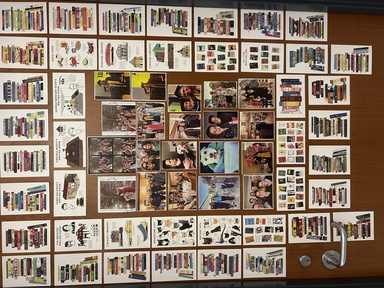
Swift’s work, while in Dr. Hill’s Classic Cult Cinema course, students watched the Rocky Horror Picture show and celebrated its 50th anniversary with a party.
Another addition to bookish culture at the Iowa Honors Program is the Honors Book Club. The largely student-run club is in its second year of operations and is hosting local author, DK Nnuro, in December. Nnuro is the author of the novel What Napoleon Could Not Do and is currently working at the University of Iowa Stanley Museum of Art as a curator of special projects.
Literary culture is also visible in the Honors Program lobby. After a suggestion from students, honors staff agreed to set up a display of journals from literary magazines on campus “so students can grab them when they’re in the study spaces and read what other students are writing,” explained Hill.
Lynne Inouye, a senior studying English and creative writing, expressed her excitement to “have that physical space where you can distribute all the magazines on campus.” Inouye is a publisher for Ink Lit Magazine, which focuses on the works of first-year students.
The Honors Program draws students of various majors into literary culture, according to Inouye: “I think Honors gives us that room to connect and then to say there are writing and reading-based opportunities here, even if you’re not studying that.”
For Inouye, keying in to the local literary culture makes good sense: “So much of being in Iowa and in this space is also engaging and collaborating, whether that’s joining a lit mag, going to a Prairie Lights reading, or going to the Iowa City Book Festival.”
Bishop agreed, emphasizing the impact of how the Honors Program encourages its students to explore and experience Iowa City, both through its signature courses and its experiential learning curriculum.
“One of my favorite aspects of the Honors Program is that they want students to get the most out of their experiences,” she said, adding, “Not just in Honors, but at the University of Iowa, and in Iowa City as a whole, including important facets of Iowa City like the culture surrounding literature, writing, and creating art.”

About the Author
Emily Vitosh is a second-year student from Falls City, Nebraska, studying English and creative writing on the publishing track. She loves reading on the Pentacrest lawn and recently joined the Wilder Things Literary Magazine staff as a copy editor.