Beautiful Chaos
Honors Students Read About and Navigate the Transition to Adulthood
by Natalie Thomas
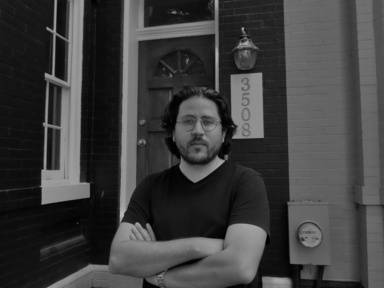
Growing up has never been easy. The transitions from childhood to adolescence and adolescence to college life come with many conflicts as people try to find their place in the world. However, these transitions also create a unique space for storytelling. Sebastian Romero, a graduate student in the Iowa Writers’ Workshop, teaches an honors section of The Interpretation of Literature titled, “Inventing Youth: The Lies and Truths of Coming of Age”.
“It’s what I love, honestly, about these stories—that they can be about so much because they’re all about youth in a way,” Romero said. “That’s something I really like about young people in general. That beautiful chaos… [is] really hard, but it’s also quite moving to witness.”
In choosing texts for the class, Romero emphasized the importance of relatability in order to make studying literature a fun and relevant experience. The class’s three major novels are The Secret History by Donna Tartt, Less Than Zero by Bret Easton Ellis, and Norwegian Wood by Haruki Murakami.
“What I thought would also be interesting is, yes, reading a lot of coming-of-age, but also seeing how the lines between fiction and nonfiction blur in a lot of these tales,” Romero said. “A lot of the writers that write them use elements of their own lives to be inspired by and write these texts, so I thought I would pick three books that were both fiction and non-fiction in different ways.”
This exploration of nonfiction vs. fiction or “lies and truths” was the basis for the class’s title. Other selections for the class range across a variety of media types and include the Tennessee Williams play The Glass Menagerie and the music of Lana Del Rey and Taylor Swift.
Along with readings and discussion, the class includes writing exercises. Recently, Romero had his students write for ten minutes about a moment or a significant relationship from their lives.
In reading their responses, Romero was interested to discover common threads and stories matching his college experience: “‘I met my roommates and at first I didn't think we were going to get along, but in the end we did. Or we went to a party, or I broke up with my best friend.’… I think in a way, youth is always youth, you know?”

While honors students go through the trials of this period like anyone else, their experience also comes with unique challenges and opportunities. Honors Associate Director Emily Hill teaches the spring course Honors Students and Wellness, where she has had the opportunity to observe how University of Iowa honors students navigate the transition to adulthood. Among students’ personal and relational growth, they also come of age intellectually during college.
Hill spoke on students’ first year of college and how it can give them a taste of their major. “I think that can be really exciting for students,” she said. “It can also help them come to a realization of whether the field that they have chosen is actually the field for them.”
She described the college lifestyle itself as transitional, with many students being away from home for the first time, but also having many supports available to them. Hill noted many honors students don’t take advantage of campus academic resources, however, some because they don’t think those resources are geared for them.
“Students kind of realize that they've been resisting asking for help because they want to be perceived in a certain way, like they got this, they got the grades,” Hill said. “But I try to encourage students to actually use these resources because it can be very freeing and open up new opportunities to them and maybe even dive deeper into the topics that they are studying.”
College life comes with many new challenges for honors students, but they also grow in so many ways—in relationships, academics, and worldview. As Romero said, it’s “a beautiful chaos.”

About the Author
Natalie Thomas is a second-year student from Cedar Falls, Iowa studying English and creative writing on the publishing track with a certificate in medieval studies. She enjoys writing and reading psychological fiction and her favorite book is Crime and Punishment by Fyodor Dostoevsky.